
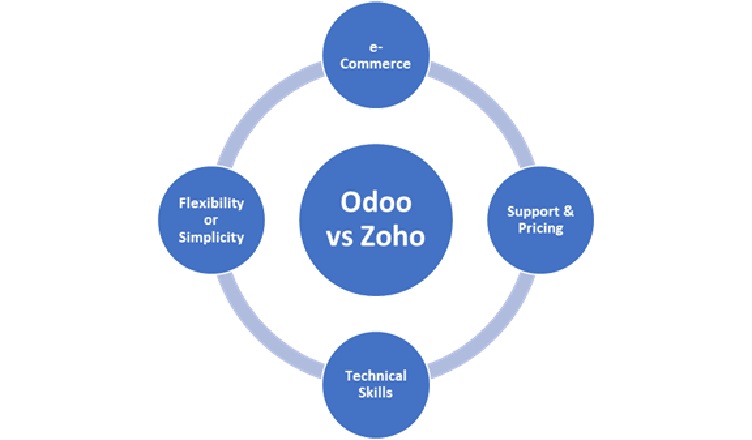
The e-commerce world requires smart choices, and picking the right platform plays a huge role in success or failure. Two big names often stand out: Odoo and Zoho. Both offer strong features, but one might truly fit your goals. Let’s break down their strengths and see which works better for your e-commerce plans.
Table of Contents
The Key Idea: Flexibility or Simplicity?
Odoo focuses on flexibility. Its design allows businesses to shape workflows to fit their specific needs. This is possible because of its open-source foundation and modular setup. Whether you need tools to manage CRM, manufacturing, accounting, or inventory, Odoo’s modules work together in one connected system.
On the other hand, Zoho thrives on being user-friendly. Its cloud-based tools are simple to use and ready to go. This makes Zoho a good fit for small or medium businesses that want quick setup without dealing with complex tech details.
e-Commerce: Design, Integration, and Inventory Management
If you want to launch an online shop, Odoo’s e-Commerce module makes things easier with its all-in-one approach. It lets you handle products, sales, inventory, shipping, and analytics without needing separate tools. This setup works well if you already use Odoo for eCommerce. The tools connect and feel like they’re part of the same system.
On the other hand, Zoho Commerce focuses on ease of use. Setting up a store is straightforward, thanks to ready-made themes, an included checkout system, and multi-currency options. It also works seamlessly with Zoho’s other apps like Inventory, Books, and Campaigns.
Background & Community Support
People who rely on tools developed by communities will find Odoo Community Edition (often called odoo community) a great resource. It operates under an open-source license, which makes it free. The Odoo Community Association (OCA) supports it by providing thousands of well-reviewed modules and maintaining a lively global network of users and developers.
Zoho takes a different approach as it is proprietary. It includes solid customer support and detailed documentation, but it does not offer the open-source plugin options that allow Odoo users to increase features and gain more freedom.
Pricing and Scalability
Here’s how they differ. Odoo provides a free Community Edition that includes core features, which works well for startups. The enterprise plans group several apps under one user, which can help teams grow more and manage costs better if they use a lot of modules.
Zoho uses a tiered pricing model based on how many users you have and the feature set you pick. It starts at a reasonable price but can become more expensive as your team increases in size.
Ease of Learning & Required Technical Skills
The main difference between these two platforms shows up in how easy they are to learn. Odoo packs a lot of power, but its wide range of tools might feel like a lot to handle at first. Without a tech-savvy team or a good partner to guide you, it can take some time to get familiar with everything Odoo offers.
Meanwhile, Zoho focuses on keeping things simple. You can have a working store ready in just a few hours. Its interface is easy enough to figure out for teams without tech expertise. But this simplicity might hold you back if your business needs grow past what Zoho can handle.
So, Which One Should You Go With?
- If you run a growing online store that is complicated or needs strong control over every part of the process, Odoo can be a great tool. Odoo for e-commerce is useful. Its open-source design flexible modules active Odoo community, and options to customize suit businesses that are growing or aiming higher.
- If you want something quick easy to use, and simple to manage without worrying about technical issues, Zoho Commerce might be a better fit. It offers straightforward solutions with minimal hassle.
Final Thoughts
There’s no one-size-fits-all solution, but understanding your company’s size, tech capabilities, and need for customization helps you decide. If you need the flexibility of open-source, choose Odoo Community and its e-commerce tools. If you prefer easy setup and simple features, Zoho is a solid choice.

Hemant is Digital Marketer and he has 6 + years of experience in SEO, Content marketing, Infographic etc.